An American’s First Step Into Africa, And It Was The Gambia
TOURISMVOICES
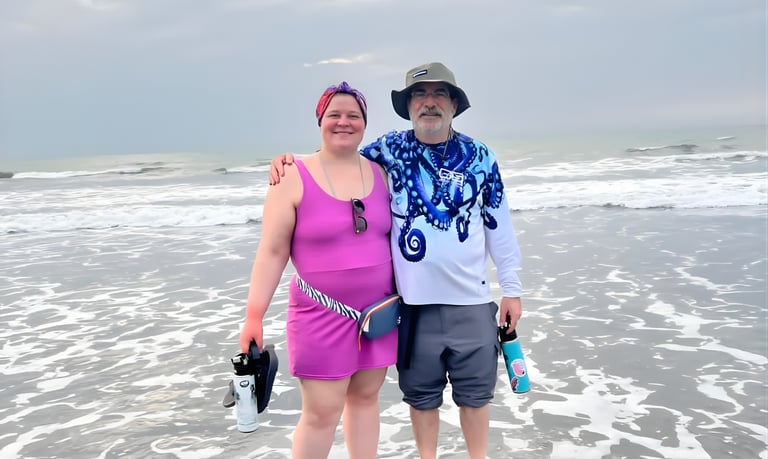
An American’s first step in Africa was The Gambia, where Stephanie explores tourism, safety, and community impact.
Choosing The Gambia Before Africa’s “Big” Destinations
When Americans think of visiting Africa, the first names that often come to mind are South Africa, Egypt, Nigeria, Morocco, or Kenya. Rarely does The Gambia, the smallest country on mainland Africa, top that list. Yet for Stephanie, an American visiting the continent for the first time, The Gambia became her entry point into Africa.
Her two-week stay offers insight into what it means to experience Africa not through its most globally marketed destinations, but through a smaller, community-centered nation.
Why The Gambia?
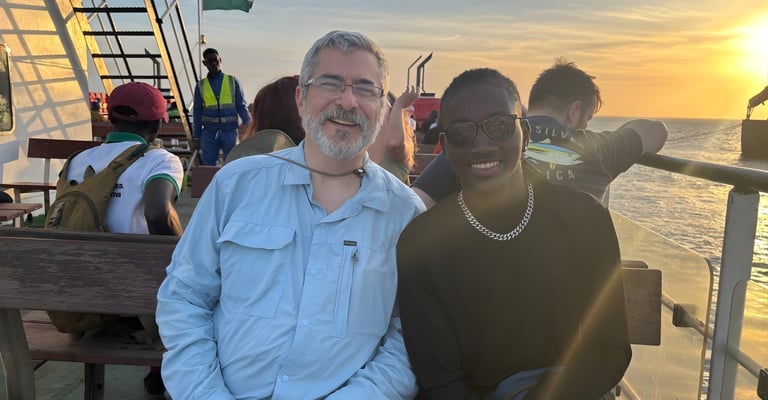
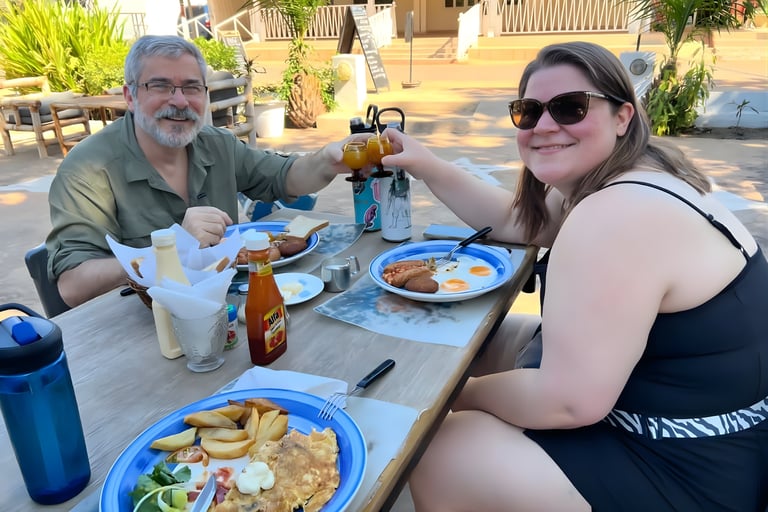
Stephanie’s trip was motivated by a personal connection. After nearly two years of a digital relationship, she traveled to meet her partner in person while also experiencing his world and everyday life. Her father accompanied Stephanie.
“That trip was to meet him and also experience his world and his day-to-day in The Gambia.”
It was also her first time visiting Africa.
“You are correct. That was my first time.”
While her family felt some nervousness, she approached the journey with excitement.
First Impressions: Arrival & Adjustment
For many first-time visitors to Africa, safety and comfort are primary concerns. Stephanie describes her arrival experience as welcoming and respectful.
“From the airport onward, people were very respectful, helping with bags, saying ‘ladies first.’ It really stood out to me.”
Certain systems, such as entry and exit fees, were unfamiliar, but not alarming.
“It wasn’t that I felt unsafe; it was just new.”
Her early adjustment was more about understanding procedures than overcoming fear.
Living in the Tourism Hub: The Senegambia Strip
Stephanie stayed primarily along the Senegambia Strip, The Gambia’s main tourism corridor. For a first-time visitor, this environment provided accessibility and structure.
“You walk out of your hotel, and everything is right there, restaurants, entertainment, people.”
Within days, she felt comfortable navigating markets, withdrawing money, and walking independently.
“After a handful of days, I felt comfortable.”
This rapid adjustment highlights how tourism infrastructure can shape a visitor’s confidence.
Cultural Exposure: History and Heritage
Stephanie ventured beyond the tourism strip to visit Kunta Kinteh Island, a historically significant site linked to the transatlantic slave trade.
“Going to Kunta Kinteh Island was powerful. You really feel the history when you’re there.”
For a first-time American visitor to Africa, engaging directly with this history added emotional depth to the trip.
Nature and Leisure
Her itinerary also included Bijilo Monkey Park, an experience she initially approached with hesitation.
“I wasn’t sure I’d like it, but I ended up feeding the monkeys. My dad was braver than I.”
The experience blended leisure with guided education, showing how even small-scale attractions contribute to tourism value.
Art, Markets, and Local Enterprise
As an interior designer and artist, Stephanie was particularly struck by the craftsmanship in local markets.
“The artisans blew me out of the water. The paintings were exquisite.”
Her engagement went beyond observation. She developed a relationship with a vendor who handmade clothing for her.
“She made me a dress and a headband. That meant a lot to me.”
This interaction reflects how tourism in The Gambia is deeply tied to micro-enterprises and personal connections.
Hospitality and Community
One of the strongest recurring themes in Stephanie’s reflections was community warmth.
“People would stop and ask if you were okay, even if they didn’t know you.”
She recalled moments of spontaneous assistance, including help exchanging currency for ferry tickets.
“She didn’t have to help us, but she did.”
For her, The Gambia felt socially intimate rather than transactional.
Safety Perception
Visible security presence, including checkpoints and patrols, felt unfamiliar compared to the United States. However, it did not create fear.
“I actually felt they were there to keep tourists safe.”
Her overall safety assessment was clear.
“Overall, I felt pretty safe.”
Tourism and the Local Economy
Stephanie quickly observed how much of the Senegambia area depends on tourism for livelihood.
“That whole strip relies on tourism, from artists to guides to people selling food.”
She described Gambians as resourceful entrepreneurs.
“They’re the ultimate salespeople, because they have to be.”
Her observation underscores tourism’s visible role in economic survival.
Challenges and Practical Advice
While her experience was overwhelmingly positive, she acknowledged areas where clearer information could improve the visitor experience, particularly regarding currency and logistics.
“Make sure you understand the money system and have smaller bills.”
She also emphasized environmental preparedness.
“Bring sunscreen, a sun hat, and good walking sandals.”
She pointed out that tourism could put a strain on a weak electricity infrastructure, which raises concerns about sustainability.
“We use a lot of power as tourists; that’s something to think about.”
A Different Kind of African Introduction
Stephanie’s first encounter with Africa was not through the continent’s most globally branded destinations. Instead, it was through a small West African country where tourism feels personal, community-driven, and culturally immersive.
When asked to summarize her experience:
“My trip to The Gambia was pleasant, fun, and a real adventure.”
She says she would return and would recommend it to others.
“People should tour Africa. You get a more well-rounded view of the world.”
Stephanie’s first visit to The Gambia shows both the promise and the pressure of tourism in a small but powerful destination. She experienced warmth, safety, cultural depth, and genuine human connection, proving that The Gambia’s greatest asset is its people. At the same time, her observations about infrastructure, currency clarity, and the heavy reliance on tourism reveal areas that require intentional improvement. For business owners, this is a call to professionalize and strengthen systems; for lawmakers, a reminder that infrastructure and sustainability must match hospitality; and for everyday Gambians, proof that community is the country’s strongest brand. The experience was “pleasant, fun, and a real adventure,” but the real opportunity lies in building a tourism sector that is as structured and resilient as it is welcoming.